The group exhibition Tuning the Gaze at Pogon Jedinstvo in Zagreb brings together three artworks that invite the viewer to understand the gaze not as a neutral act of observing but as a process of construction—material, emotional, and socially mediated. Here, tuning denotes a fine adjustment; a shift, calibration, and alignment that reveals layers of perception. The works examine how the gaze is formed, reflected, and refracted through material, light, and the body. Each of the three artists works with a curator to explore how gaze is continually calibrated—by light, material, space, or the viewer’s intention. The artists show how meaning is constantly shifting and produced by the very act of looking, which fills the space of change through ceaseless tuning.
The project is developed in collaboration between the curatorial collective WHW and Pogon—the Zagreb Center for Independent Culture and Youth.
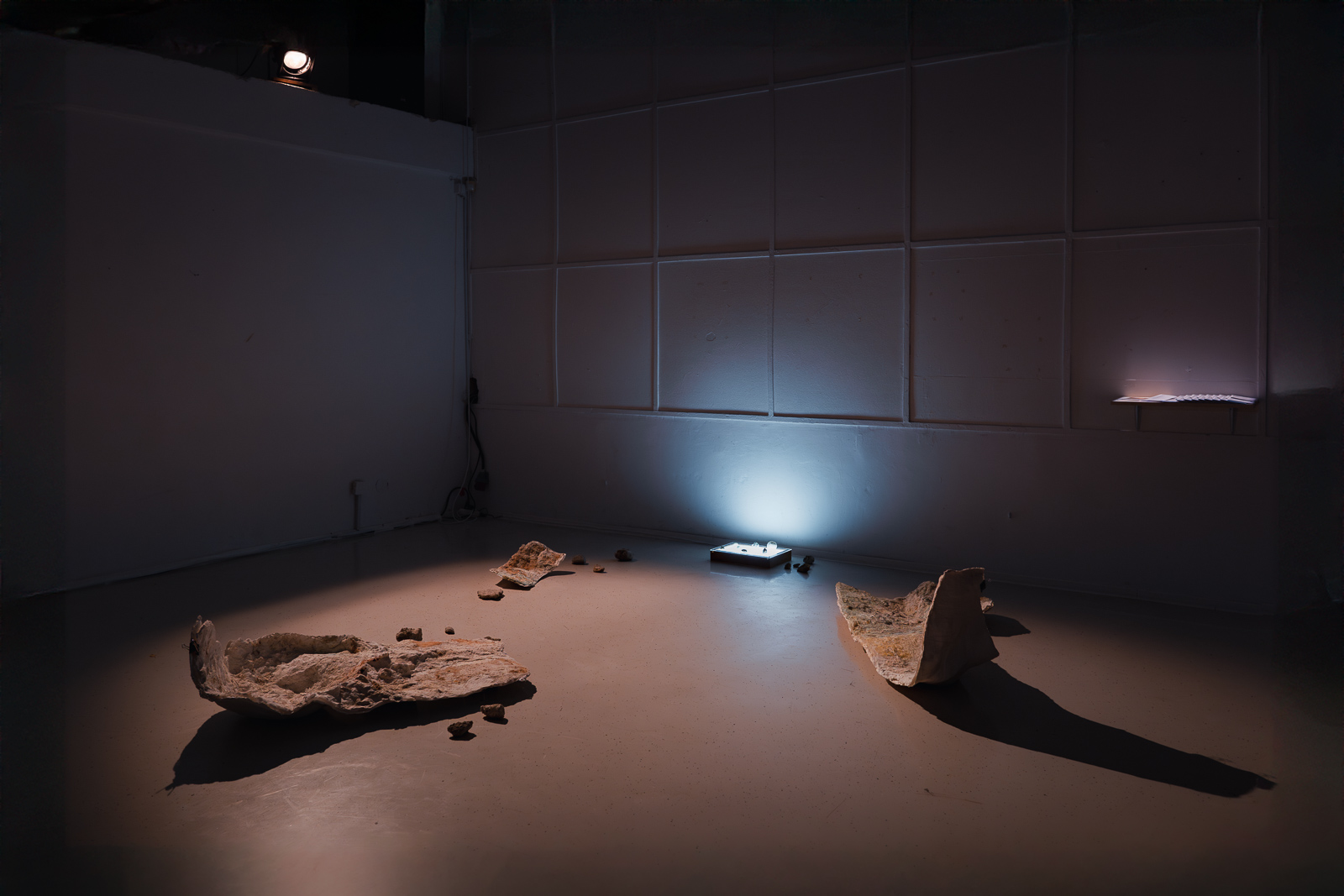
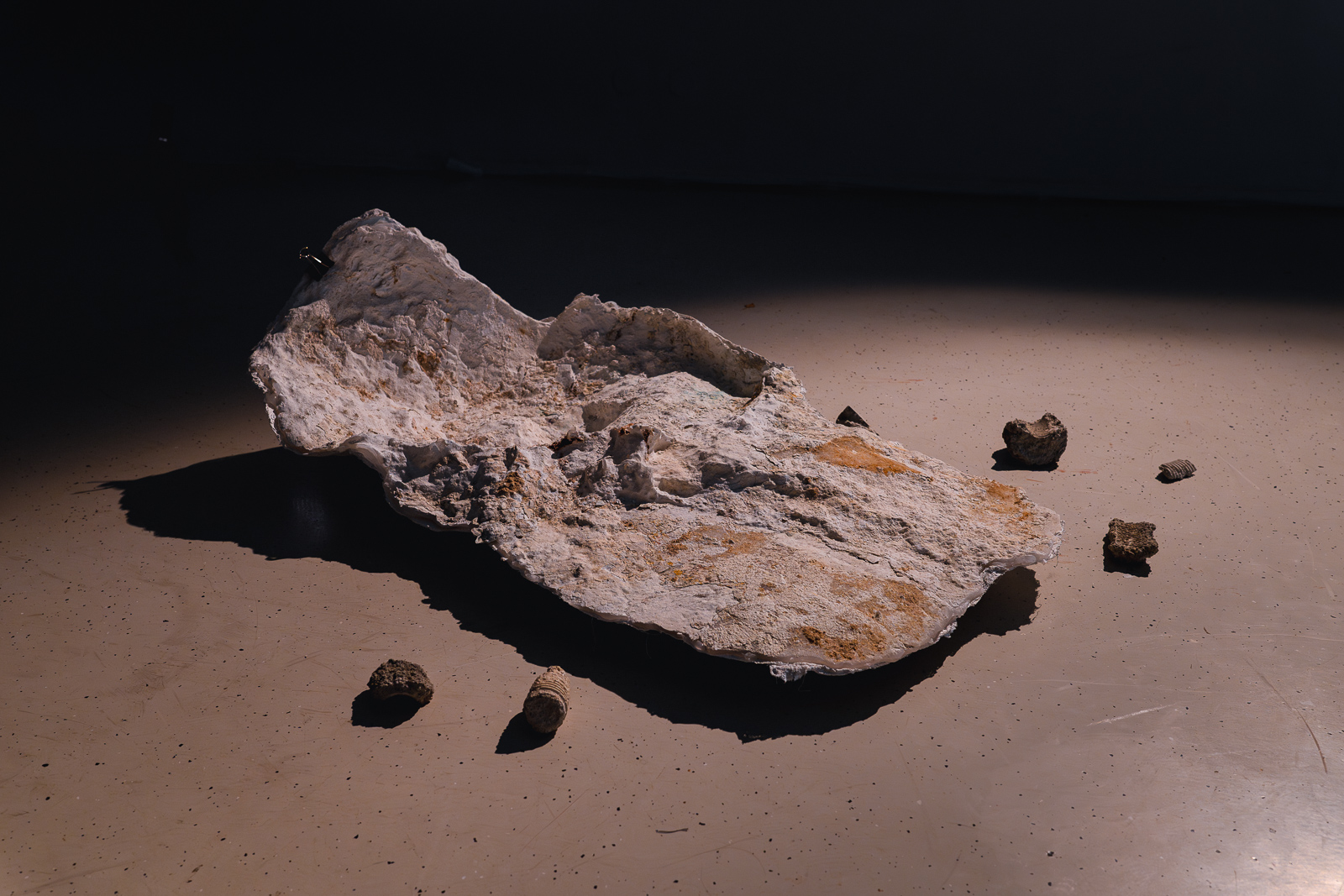
Following her earlier investigations into human impact on the natural environment and the constraints of natural givens such as the physical properties of materials and manifest forms of matter, Lucija Ostrogović in her work I’ll break her gently curated by Lucija Furač enters an interior space organized around a massive, irregular rock hidden behind a door and a curtain. The owner of this dwelling, whose everyday life the viewer loosely follows, lives in constant adaptation to the rock, devising fascinating ways to at least partially restrain and tame it, and even to harness the potential of its form for simple, everyday needs.
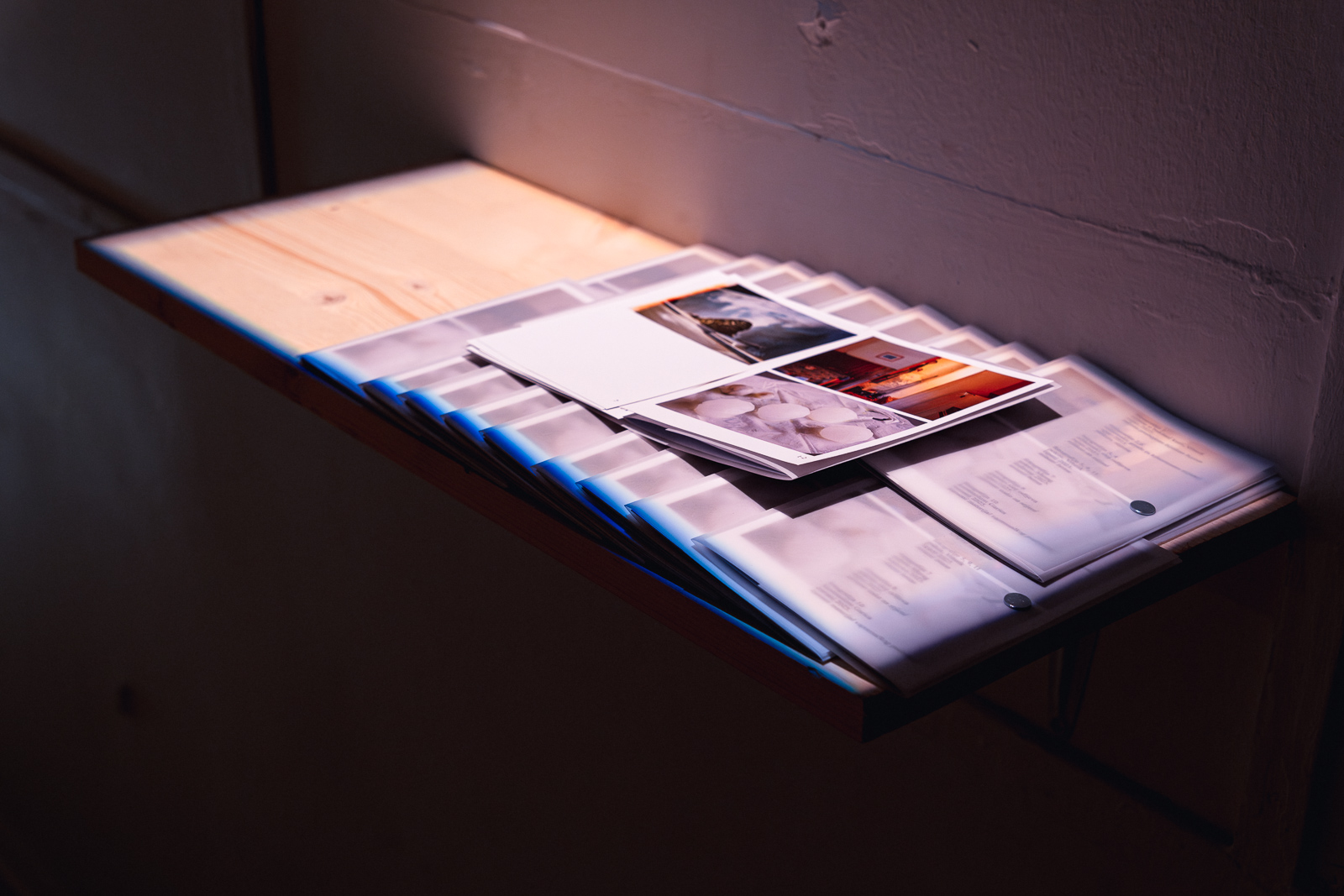
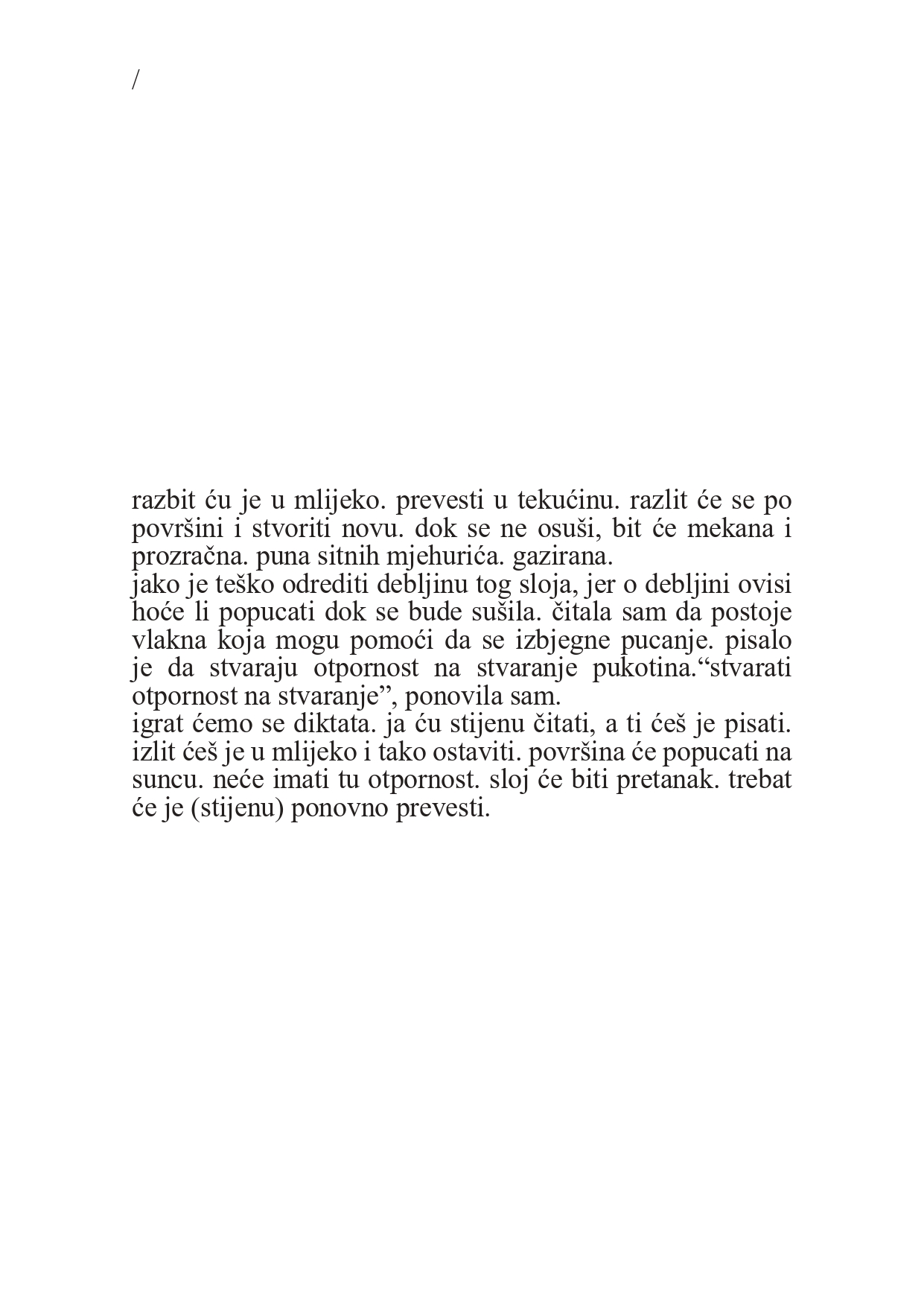
Interweaving photographs and text, the work reconstructs these spatial relations in the gallery context—partly literally, and partly in the mind of the viewer. Continually seeking a narrative thread, the viewer also immerses herself in relations between soft and hard, smooth and rough, liquid and solid, cold and warm, and wet and dry. Training the gaze anthropomorphizes the rock, which is initially read as merely a bizarre impediment to the organization of domestic space. This play with ways of seeing and understanding things, where the position of people in relation to given natural elements matters, rests as much on observing with the eye as on a particular narrative perspective and linguistic choices.
Lucija Ostrogović (Vrbnik, 1996) combines visual art and anthropology, focusing on their points of overlap and contact. Her methodological and research process is based on an ethnographic approach to everyday life. Through her works, she examines perceptions and relationships among landscape, space, and community using mapping and subtle spatial interventions.

The program was supported by the City of Zagreb—the City Office for Culture and Civil Society, the Ministry of Culture and Media of the Republic of Croatia, and the Kultura Nova Foundation.
Exhibition photos taken by Sanja Merćep.